
Shop the collection
Bridles & Reins
- 30-day easy returns
- Fast US delivery from multiple warehouses
- Secure checkout: Shop Pay, PayPal, Amazon Pay, Google Pay

Related Searches
Bridles & Reins
Effective communication between rider and horse begins with properly fitted, well-constructed tack. Horse bridles and reins are the primary interface for directional control, speed regulation, and responsiveness during every ride. Whether you are schooling a young horse, competing in a discipline-specific event, or trail riding with a seasoned mount, the right bridle and rein combination directly affects how clearly your aids are received and how comfortably your horse responds. This collection covers English bridles, Western bridles, bitless bridles, split reins, and closed reins suited for different disciplines, horse temperaments, and rider experience levels.
Why Bridles & Reins Matter
A bridle is not simply a piece of equipment - it is the primary channel through which a rider communicates with a horse. Poorly fitted bridles cause pressure points, resistance, and behavioral issues that are often misread as training problems. Reins that are too heavy, too light, or the wrong length for a discipline create inconsistency in the contact and reduce the clarity of the rider's aids.
The right bridle fits the horse's head without pinching, sits correctly on the facial bones, and positions the bit at the appropriate height in the mouth. The right reins match the riding discipline, the rider's hand size and experience, and the level of sensitivity required for the horse being ridden. Together, a correctly fitted bridle and appropriate reins form the foundation of safe, effective riding.
Benefits of Quality Horse Bridles & Reins
- Precise communication - well-fitted bridles and correctly weighted reins transmit subtle aids clearly, improving responsiveness without force
- Horse comfort - properly adjusted crownpieces, browbands, and nosebands eliminate pressure points that cause head tossing, resistance, and evasion
- Rider control - reins matched to discipline and hand size give the rider consistent, reliable contact throughout the ride
- Durability - quality leather and reinforced synthetic materials withstand daily use, weather exposure, and the mechanical stress of active riding
- Discipline suitability - bridles and reins designed for specific disciplines meet the functional and regulatory requirements of English, Western, and bitless riding
- Adjustability - multiple adjustment points on quality bridles accommodate different head shapes and sizes, from fine-boned horses to drafts
- Training support - appropriate tack choices support correct training progression without creating unnecessary resistance or confusion
How to Choose Horse Bridles & Reins
Selecting the right bridle and reins requires matching the equipment to the horse, the discipline, and the rider's goals. Use these criteria to guide your selection:
- Riding discipline - English and Western disciplines have distinct bridle styles, bit placements, and rein configurations; select tack designed for your specific discipline
- Horse head size and shape - measure from the corner of the mouth to the poll and across the forehead to determine correct sizing; most bridles are available in pony, cob, horse, and warmblood sizes
- Bit compatibility - confirm the bridle's cheekpiece attachment style is compatible with your bit; snaffle bridles use different attachment points than Weymouth or Pelham setups
- Material preference - leather offers traditional feel, durability, and suppleness with proper care; synthetic materials are lower maintenance, weather-resistant, and often more affordable
- Rein length and weight - longer reins suit trail riding and Western disciplines; shorter, lighter reins are preferred for arena work and disciplines requiring fine contact
- Rider experience - beginners benefit from reins with grip texture or rubber stops; experienced riders may prefer plain leather or laced reins for feel and sensitivity
- Horse temperament - sensitive or young horses may go better in a bitless bridle or a simple snaffle setup before progressing to more complex bitting arrangements
Types of Bridles & Reins
English Bridles
English bridles are designed for disciplines including dressage, show jumping, eventing, and hunt seat riding. The standard English snaffle bridle consists of a crownpiece, browband, cheekpieces, noseband, throatlatch, and bit. Double bridles, used in upper-level dressage, carry two bits - a bradoon and a curb - and require two sets of reins for independent control. English bridles are typically made from leather in black or havana brown, with stitching detail and hardware finish varying by discipline formality. Fit is critical: the noseband should sit two fingers below the cheekbone, and the bit should create one to two wrinkles at the corner of the mouth.
Western Bridles
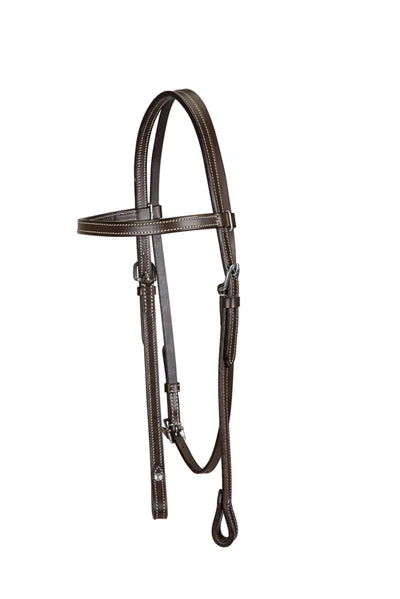
Western bridles are used in disciplines including reining, cutting, barrel racing, trail, and pleasure riding. They are typically one-eared or two-eared designs without a noseband, relying on the headstall to position the bit correctly. Western bridles are commonly made from leather with tooled or plain finishes, silver hardware, and rawhide or rope accents depending on the style. Fit considerations focus on correct bit height and headstall adjustment to prevent the bit from hanging too low or pulling too high. Western bridles are paired with split reins or romal reins depending on the discipline and regional tradition.
Bitless Bridles
Bitless bridles provide control and communication without a bit in the horse's mouth, using pressure on the nose, poll, or chin groove instead. Common designs include the sidepull, which applies direct lateral pressure; the cross-under or Dr. Cook style, which uses crossed straps under the jaw for poll and nose pressure; and the hackamore, which uses a mechanical shank for leverage on the nose and chin. Bitless bridles are suited for horses with mouth sensitivity, dental issues, or horses in early training where bit introduction is being approached gradually. They are also used by riders who prefer a softer communication method for trail and recreational riding.
Split Reins
Split reins are two separate, unconnected reins used primarily in Western riding. Each rein is held independently, allowing the rider to use one or both reins for directional cues, neck reining, or ground work. Split reins are typically 7 to 8 feet long and made from leather, rope, or nylon. The length allows the rider to drop one rein without losing it entirely - a practical feature for trail riding and working situations. Split reins are the standard choice for most Western disciplines and are required in many Western show classes.
Closed Reins
Closed reins are a single continuous loop connected at the ends, used in English riding and some Western disciplines. They provide consistent contact and are easier to manage for riders who are developing their rein handling skills. English closed reins are available in plain leather, laced leather, rubber-grip, and webbing styles. Rubber or laced reins offer grip in wet conditions and are commonly used in jumping and eventing. Rein width varies by discipline - dressage riders typically use narrower reins for feel, while jumping riders often prefer wider reins for security.
Frequently Asked Questions
How do I measure my horse for a bridle?
Measure from the corner of the mouth, up over the poll, and down to the corner of the mouth on the other side for the crownpiece length. Measure across the forehead for browband width. Most manufacturers provide sizing charts - when in doubt, size up and adjust down using the cheekpiece holes. A correctly fitted bridle should have the cheekpieces adjusted to the middle holes, leaving room to go up or down as needed.
What is the difference between leather and synthetic bridles?
Leather bridles require regular cleaning and conditioning to maintain suppleness and prevent cracking, but offer superior feel, durability over decades, and a traditional appearance. Synthetic bridles are easier to clean, resistant to moisture and mold, and typically less expensive. For everyday use and wet climates, synthetic is practical. For showing and long-term investment, quality leather is preferred by most serious riders.
Can I use a Western bridle for trail riding?
Yes. Western bridles are well-suited for trail riding due to their simple headstall design, durable construction, and compatibility with a wide range of bits. A split rein setup is particularly practical on the trail, as dropped reins can be retrieved without dismounting. For riders who prefer a softer option, a sidepull or hackamore is also a common trail riding choice.
What reins are best for a beginner rider?
Beginners benefit from closed reins with rubber grip or laced leather, which provide secure hold even with inconsistent contact. Reins that are too thin or too smooth make it difficult to maintain a consistent feel. For Western beginners, split reins with a moderate weight and length are easier to manage than very long or very light reins.
Are bitless bridles as effective as bitted bridles?
Bitless bridles can be highly effective for many horses and riding situations, particularly trail riding, early training, and horses with mouth sensitivity. They are not universally accepted in competition - most English and Western show disciplines require a specific bit. Effectiveness depends on the horse's training, the rider's skill, and the design of the bitless bridle chosen.
How often should I replace my reins?
Inspect reins regularly for cracking, fraying, weakened stitching, or damaged hardware. Leather reins that are properly maintained can last many years. Rubber-grip reins wear faster and should be replaced when the grip surface deteriorates. Any rein showing structural weakness at the bit attachment or buckle should be replaced immediately, as failure during riding is a safety risk.
What noseband style should I choose for an English bridle?
The cavesson noseband is the most versatile and widely used - it suits most horses and disciplines and can be used with a flash attachment for additional stability. The flash noseband adds a lower strap to prevent the mouth from opening. The figure-eight noseband crosses over the nose and is common in eventing and jumping. The drop noseband sits below the bit and is used in some dressage and training contexts. Choose based on your horse's response and your discipline's requirements.
Shop Horse Bridles & Reins
Browse the full Bridles & Reins collection to find English bridles, Western bridles, bitless bridles, split reins, and closed reins suited for every discipline, horse size, and riding goal. Every product in this collection is selected for fit quality, material durability, and functional performance - so your communication with your horse is clear, consistent, and comfortable from the first ride.
Latest Bridles & Reins Articles
No articles found for Bridles & Reins right now. Please check back soon!