
Rabbit Proofing a Room: What to Cover, Block, and Move
A room-by-room proofing method for rabbit owners: why rabbits chew what they chew, the cord protocol that comes first, guards and decoy chews for baseboards and...
Shop the collection
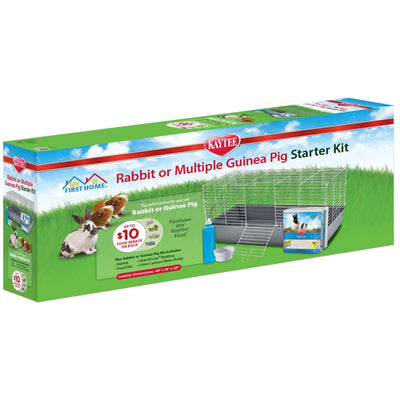
The enclosure a small animal lives in shapes every aspect of its daily experience - how much it moves, how safely it rests, how effectively it thermoregulates, and how fully it can express natural behaviors. Small pet cages, hutches, and habitats that are appropriately sized, well-ventilated, and structurally secure provide the foundation for long-term physical and behavioral health. This collection covers the full range of small animal housing options - from wire cages and indoor habitats to outdoor rabbit hutches, multi-level enclosures, exercise pens, and modular systems - with options suited to rabbits, guinea pigs, hamsters, gerbils, chinchillas, and other small pets across indoor and outdoor environments.
Small animals are frequently housed in enclosures that are too small, poorly ventilated, or structurally inadequate for their species' needs. The consequences are measurable: restricted movement contributes to obesity, muscle atrophy, and skeletal problems; poor ventilation increases ammonia concentration from waste, leading to respiratory irritation; inadequate security exposes animals to predator stress or escape risk. Rabbits require a minimum of 12 square feet of living space combined with regular access to a larger exercise area - the traditional small hutch design falls significantly short of this standard. Guinea pigs are social animals that require space for simultaneous movement by multiple individuals. Hamsters, despite their small size, are highly active animals that in the wild travel several miles nightly and require enclosures that accommodate this activity level. Selecting a small animal habitat that genuinely meets the species' space, ventilation, and behavioral requirements is the most impactful housing decision an owner can make.
Selecting the right small animal habitat requires matching the enclosure's dimensions, construction, and features to the specific requirements of your species. Key factors to evaluate include:
Wire cages are the most common indoor housing format for small animals including guinea pigs, hamsters, gerbils, and rats. They provide excellent ventilation through open wire panel construction, are lightweight and easy to reposition, and typically feature removable solid base trays that simplify substrate management and cleaning. Wire cage quality varies significantly - look for powder-coated or galvanized wire that resists rust and corrosion, solid base trays with sufficient depth for substrate, and secure latching mechanisms on all doors. Bar spacing must be appropriate to the species to prevent escape and injury. For guinea pigs, C&C (cubes and coroplast) style wire grid systems offer the most flexibility in sizing and layout, allowing owners to build enclosures that meet recommended minimum space requirements more easily than many commercial cage options.
Rabbit hutches are designed for housing rabbits in outdoor or semi-outdoor environments, combining a sheltered sleeping compartment with an open wire exercise area within a single structure. Quality outdoor hutches are constructed from weather-treated timber with wire mesh panels, a waterproof roof, and secure bolt latches on all access points. The sleeping compartment provides insulation and darkness for rest, while the wire run section allows movement and ventilation. Hutch sizing is a critical consideration - the minimum recommended hutch size for a single rabbit is 6 feet long by 2 feet wide by 2 feet tall, with access to a larger exercise area. Many commercially available hutches fall below this standard; always verify internal dimensions before purchasing. Hutches used outdoors must be positioned to avoid direct sun, prevailing wind, and ground moisture, and should be elevated to reduce predator access and damp.
Multi-level habitats add vertical living space through internal ramps, platforms, and shelving that create distinct zones within the enclosure for sleeping, feeding, and activity. They are well-suited to species that naturally use vertical space, including rats, chinchillas, and ferrets, and provide enrichment value through the physical challenge of navigating between levels. When selecting a multi-level habitat, verify that ramp angles are shallow enough for safe navigation, platform edges have adequate lip depth to prevent falls, and bar spacing on all panels is appropriate to the species. Multi-level designs are less suitable for guinea pigs, which are ground-dwelling animals with limited climbing ability and a high risk of injury from falls. For species that benefit from vertical space, multi-level habitats significantly increase usable living area within a compact footprint.
Playpens and exercise pens provide supervised free-roaming space outside the primary enclosure, allowing small animals to exercise, explore, and engage in natural movement behaviors that cannot be fully accommodated within a fixed habitat. They are available as freestanding panel systems that can be configured in various shapes and sizes, and as floor-level enclosures with or without a base. Exercise pens are particularly important for rabbits and guinea pigs, which require daily access to space significantly larger than their primary enclosure for adequate physical activity. Pen height must be sufficient to prevent jumping escape - a minimum of 24-30 inches for rabbits. Pens used on hard floors should include a non-slip mat or base panel to prevent injury during active movement. They are not a substitute for a secure primary enclosure but serve as an essential daily exercise supplement.
Modular habitat systems use interlocking panels, tubes, and connectors to create fully customizable enclosure layouts that can be expanded, reconfigured, or connected to additional units over time. They are particularly popular for hamsters and gerbils, where the ability to add tunnels, nesting chambers, and activity modules creates a complex, enriching environment within a manageable footprint. Modular systems allow owners to start with a basic configuration and expand as budget and space allow, making them a practical long-term housing investment. Key considerations when selecting a modular system include the security of panel connections, the ease of disassembly for cleaning, and the compatibility of expansion units across the product range. Verify that all tube and tunnel diameters are appropriate for the animal's adult body size to prevent entrapment as the animal grows.
What is the minimum cage size for a guinea pig?
The minimum recommended enclosure size for a single guinea pig is 7.5 square feet of floor space, with 10.5 square feet recommended for a pair. Guinea pigs are social animals and should be housed in same-sex pairs or compatible groups wherever possible. Many commercially available guinea pig cages fall below the recommended minimum - always verify internal floor dimensions rather than relying on the product's stated suitability.
Can rabbits live in a hutch full time?
A hutch alone is not sufficient housing for a rabbit. Rabbits require a minimum of 3-4 hours of free-roaming exercise time daily in addition to their primary enclosure. A hutch should be connected to or supplemented by a secure exercise run or indoor free-roaming area. The hutch itself should be large enough for the rabbit to take at least three full hops in any direction and stand fully upright on its hind legs without its ears touching the roof.
What bar spacing is safe for hamsters?
Bar spacing for hamster enclosures should be no wider than 0.5 inches (approximately 1.2 cm) to prevent escape and head entrapment. Syrian hamsters are larger and can tolerate slightly wider spacing than dwarf hamster species, but 0.5 inches is the safe standard across all hamster types. Always verify bar spacing specifications before purchasing, as many commercially marketed hamster cages have bar spacing that is too wide for dwarf hamster species.
Are plastic habitat tubes safe for small animals?
Plastic tubes and tunnels used in modular habitat systems are generally safe when sized appropriately for the animal and cleaned regularly. The primary risks are overheating in poorly ventilated tube sections and chewing damage that creates sharp edges. Inspect tubes regularly for cracks or chew damage and replace any damaged sections promptly. Ensure tube diameters are appropriate for the animal's adult size - tubes that fit a juvenile animal may become a constriction risk as the animal grows.
How often should I clean a small pet cage?
Spot cleaning of soiled substrate and waste should occur daily. A partial clean - removing and replacing the most soiled substrate areas and cleaning food and water accessories - should be done every 3-7 days depending on the number of animals and enclosure size. A full clean involving complete substrate replacement and disinfection of all surfaces should occur every 1-4 weeks. Avoid cleaning too frequently for species such as hamsters that rely on scent marking for security, as complete removal of familiar scent can cause significant stress.
Can guinea pigs and rabbits be housed together?
Housing guinea pigs and rabbits together is not recommended. Rabbits can injure guinea pigs through kicking and mounting behavior, and the two species have different dietary, social, and behavioral needs that are difficult to meet simultaneously in a shared enclosure. Both species are best housed with companions of their own kind in appropriately sized, species-specific enclosures.
The right enclosure is the single most important investment in a small animal's long-term health and quality of life. Every product in this collection is selected to provide adequate space, secure construction, practical ventilation, and the structural features that support species-appropriate behavior. Browse the full range of small animal habitats - from wire cages and rabbit hutches to multi-level enclosures, exercise pens, and modular systems - to find the right housing solution for your pet.
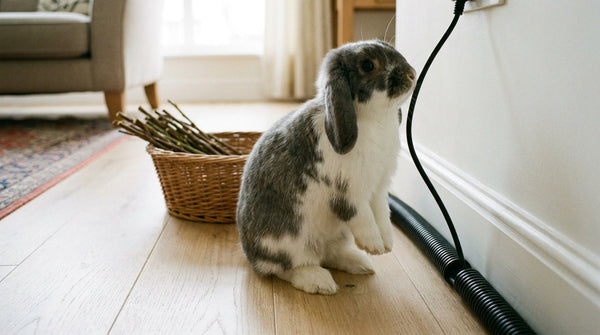
A room-by-room proofing method for rabbit owners: why rabbits chew what they chew, the cord protocol that comes first, guards and decoy chews for baseboards and...
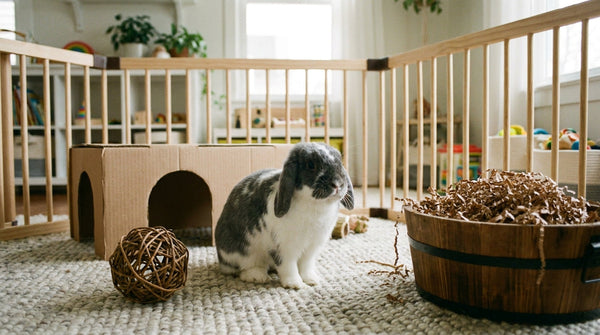
A cross-species guide to small pet play: why chewing is dental equipment rather than a treat, what each species actually uses, the wheel rules that prevent...
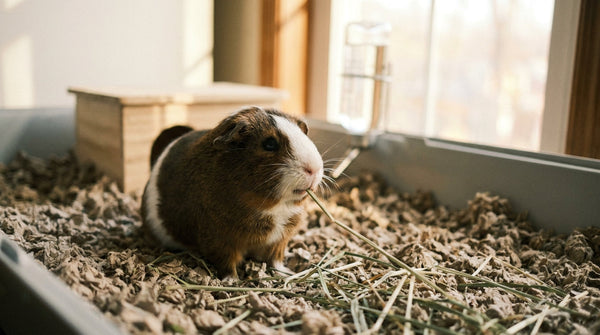
An orientation to small pet care across the whole aisle: the five things every small animal needs, a plain profile of each of the seven species,...
Sign up for our newsletter to be the first to learn about new arrivals, special promotions, and online exclusives.
*By submitting this form, you agree to receive our emails and may unsubscribe at any time.