
Shop the collection
Dog Brushes & Combs
- 30-day easy returns
- Fast US delivery from multiple warehouses
- Secure checkout: Shop Pay, PayPal, Amazon Pay, Google Pay
101 products · Page 5 of 5



Related Searches
Dog Brushes and Combs
Dog brushes and combs are the foundation of at-home coat care. Whether your dog has a short, smooth coat or a long, dense double coat, the right grooming brush removes loose fur, prevents matting, and keeps the skin beneath clean and healthy. Regular brushing with the correct tool reduces shedding, distributes natural oils, and gives you a clear view of your dog's skin condition between vet visits.
Why Brushing Matters
Brushing is not just about appearance. Consistent coat maintenance prevents tangles from tightening into painful mats, reduces the volume of loose hair shed around your home, and stimulates circulation at the skin level. Dogs with double coats or heavy undercoats are especially prone to matting if brushing is skipped during seasonal shedding cycles. For all coat types, regular grooming sessions also help your dog become comfortable with handling, which makes veterinary exams and professional grooming easier over time.
Benefits of Regular Grooming
- Removes loose, dead fur before it sheds onto furniture and clothing
- Prevents tangles and mats from forming in long or curly coats
- Distributes natural skin oils for a healthier, shinier coat
- Allows early detection of skin irritation, lumps, or parasites
- Reduces dander and allergens in the home environment
- Builds a positive grooming routine that reduces handling anxiety
How to Choose the Right Dog Brush or Comb
Choosing the right dog grooming brush starts with your dog's coat type. Short, smooth coats need light bristle brushes or rubber curry tools that lift surface debris without scratching. Long coats require pin brushes and wide-tooth combs to work through length without pulling. Double-coated breeds benefit most from deshedding tools that reach the dense undercoat without damaging the topcoat. Curly and wavy coats need slicker brushes and fine-tooth combs to separate curls and prevent matting at the root.
Grooming frequency also guides tool selection. Dogs brushed daily can use lighter tools with softer pins. Dogs brushed weekly or less often may need firmer bristles or a deshedding rake to work through accumulated loose fur efficiently.
Types of Dog Brushes and Combs
Slicker Brushes
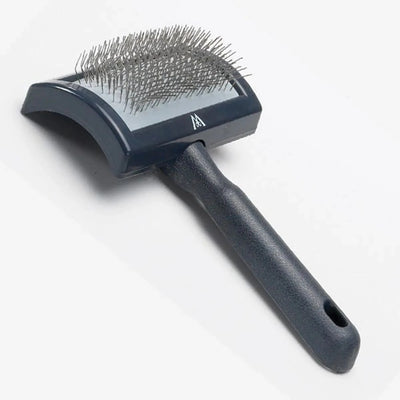
Slicker brushes feature fine, short wire pins set in a flat or curved pad. They are effective on most coat types and excel at removing tangles, surface mats, and loose fur from medium to long coats. The fine pins reach through the outer coat to lift debris without pulling on healthy hair. Slicker brushes are a versatile first tool for most dogs and work well as a finishing brush after deshedding.
Deshedding Tools
Deshedding tools are designed specifically for double-coated and heavy-shedding breeds. Their stainless steel edge or comb teeth reach through the topcoat to pull loose undercoat fur before it sheds naturally. Used during seasonal blowout periods, a deshedding tool can significantly reduce the volume of fur shed in the home. These tools should be used with care on frequency - two to three times per week during heavy shedding, less often during low-shed periods.
Combs
Grooming combs are the finishing tool of coat maintenance. After brushing, a comb confirms that no tangles remain at the root level. Wide-tooth combs work through long, thick, or curly coats without pulling. Fine-tooth combs are suited for shorter coats and detail work around the face, ears, and paws. A comb that glides through the coat without resistance is the clearest sign that brushing is complete.
Pin Brushes
Pin brushes have widely spaced, rounded-tip pins mounted on a cushioned pad. They are the preferred tool for long-coated breeds such as Golden Retrievers, Collies, and Spaniels. The rounded tips move through length without scratching the skin, and the cushioned base flexes to follow the body's contours. Pin brushes are gentle enough for daily use and effective at maintaining coat flow and preventing light tangles from tightening.
Bristle Brushes
Bristle brushes use natural or synthetic bristles packed tightly together. They are best suited for short and smooth-coated breeds where the goal is surface cleaning, light debris removal, and coat polishing rather than deep detangling. Bristle brushes distribute oils along the coat shaft and leave a smooth, finished appearance. They are also a good choice as a finishing brush after a slicker or pin brush session on medium-length coats.
Frequently Asked Questions
How often should I brush my dog?
Brushing frequency depends on coat type. Short, smooth coats typically need brushing once a week. Medium and long coats benefit from brushing two to three times per week, or daily during heavy shedding seasons. Double-coated breeds may need daily brushing during seasonal coat blowouts to prevent matting and manage shedding volume.
What brush is best for a dog that sheds heavily?
A deshedding tool is the most effective option for heavy shedders with double coats. Follow up with a slicker brush to remove any remaining surface fur and smooth the topcoat. For short-coated heavy shedders, a rubber curry brush or firm bristle brush works well to lift loose fur from the coat surface.
Can I use a slicker brush on all coat types?
Slicker brushes are suitable for most coat types, including medium, long, wavy, and curly coats. They are less effective on very short, smooth coats where bristle or rubber tools perform better. Always use a slicker brush with light, even strokes to avoid scratching the skin with the wire pins.
What is the difference between a pin brush and a slicker brush?
Pin brushes have widely spaced, rounded-tip pins and are designed for long coats where gentle detangling and coat flow maintenance are the priority. Slicker brushes have fine, closely spaced wire pins and are more effective at removing tangles, mats, and loose fur across a wider range of coat types. Many groomers use both in sequence - slicker first to remove tangles, pin brush to finish and smooth.
How do I know if my dog's coat is mat-free after brushing?
Run a fine or wide-tooth comb through the coat after brushing. If the comb moves through without resistance from root to tip, the coat is tangle-free. If the comb catches or pulls, continue working through that section with a slicker brush before combing again. Never force a comb through a mat - work from the ends inward to avoid pulling on the skin.
Shop Dog Brushes and Combs at Pets Perfect
Pets Perfect carries a curated selection of dog grooming brushes and combs matched to every coat type and shedding level. From slicker brushes for daily detangling to professional-grade deshedding tools for double-coated breeds, every tool in this collection is selected for durability, coat safety, and grooming effectiveness. Find the right brush for your dog's coat and build a grooming routine that keeps their coat healthy year-round.